 Call Us : 08071931506Call Us : 08071931506

 Send Inquiry
Metravi 1812EL Digital ELCB RCD Tester
Price 12685.00 INR/ Piece
MOQ : 1 Piece
Metravi 1812EL Digital ELCB RCD Tester Specification
- Interface Type
- Standard Euro and UK Plug Adapter
- Features
- Auto Data Hold, Backlight, Buzzer Indication, Phase Polarity Indication, Test Button Lock, Trip Time Measurement
- Humidity
- < 75% RH (Non-condensing)
- Display Type
- Large Digital LCD Display with Backlight
- Application
- Testing Earth Leakage Circuit Breakers (ELCB) / Residual Current Devices (RCD)
- Automation Grade
- Manual
- Mounting Type
- Handheld / Portable
- Test Range
- AC 100V to 265V (45~65Hz)
- Operating Voltage
- 100V to 265V AC
- Accuracy
- 5%
- Frequency
- 45 to 65 Hz
- Resolution
- 1mA
- Power Supply
- 1.5V x 6 AA Batteries
- Temperature
- 0C to 40C operating
- Measuring Range
- 10/20/30/100/300/500mA (Selectable)
- Equipment Type
- Digital ELCB / RCD Tester
- Response Time
- Instantaneous / 40ms / 150ms selectable
- Usage
- Industrial, Domestic, Laboratory use
- Machine Weight
- Approx. 360g (including batteries)
- Control Mode
- Manual
- Test Mode
- Instantaneous and Time Delay
- Carrying Case
- Yes (hard protective case included)
- Storage Temperature
- -10°C to 50°C
- Safety Category
- CAT III 300V
- Included Accessories
- Test leads, instruction manual, batteries
- Test Output Current
- Selectable (10, 20, 30, 200, 500 mA)
- Lead Length
- Approx. 1.2 metres
- Trip Time Measurement
- 10 ms to 2 s (displays RCD trip time)
- Battery Life
- Approx. 1000 tests (alkaline batteries)
- Polarity Indication
- Live/Neutral polarity check LED
Metravi 1812EL Digital ELCB RCD Tester Trade Information
- Minimum Order Quantity
- 1 Piece
- Payment Terms
- Cash in Advance (CID), Cheque, Cash Advance (CA)
- Supply Ability
- 100 Pieces Per Month
- Delivery Time
- 7 Days
About Metravi 1812EL Digital ELCB RCD Tester
- Extra Large Liquid Crystal Display.
- Very low consumption.
- Microprocessor controlled.
- Accurate digital readout of disconnection time.
- Automatic data hold function.
- Zero crossing circuitry permit testing at 0O or 180O.
- Disconnection phase polarity shown on L.C.D. display.
- Auto-off and off override.
- Polarity trip indicator ( Positive or Negative phase )
- Wiring polarity indicator.
- Measure voltage between Line and Earth before testing.
- Current Settings 10mA, 20mA, 30mA, 200mA,300mA, 500mA.
- Phase Start Selection: 0 and 180
- Over-Temperature Protection, Wiring Correctness Indication , Trip Indicator , Phase Polarity Trip Indicator
- Voltmeter (L-E) 20Vac- 280Vac
- Timer Resolution 1mS(max time=2.999S)
- Timer Accuracy 2% rdg 2mS
- Current Accuracy 5% 1mA
- Voltmeter Resolution 1Vac
- Voltmeter Accuracy 2%1Vac
Precise Trip Time Measurement
This tester excels with its ability to measure RCD trip times within a range of 10 milliseconds to 2 seconds, ensuring circuit safety compliance. The large digital LCD display offers clear backlit readings, making it easy to view results in various lighting conditions. Users benefit from accurate and reliable trip time assessments, crucial for maintenance and safety inspections.
Versatile Test Modes and Current Selection
The Metravi 1812EL allows instantaneous and time delay testing, accommodating multiple scenarios and device types. With selectable test output currents from 10mA up to 500mA, the device suits a wide array of circuit protection testing, from sensitive installations to robust industrial systems.
User-Friendly and Portable Design
Designed for ease of use, this tester features a user-friendly interface, manual control, and a test button lock. The included hard case, compact weight (approx. 360g), and 1.2-metre test lead ensure that the device is both protected and portable, ideal for field work across different environments.
FAQs of Metravi 1812EL Digital ELCB RCD Tester:
Q: How do I use the Metravi 1812EL Digital ELCB RCD Tester to check an RCD or ELCB?
A: To test an RCD or ELCB, connect the tester using the supplied leads, select the desired test current and mode (instantaneous or time delay), and initiate the test with the control button. The large LCD will display the trip time, allowing you to confirm if the protective device functions correctly.Q: What types of RCD or ELCB devices can this tester be used on?
A: The Metravi 1812EL can test a wide range of single-phase RCDs and ELCBs across industrial, domestic, and laboratory installations, provided the operating voltage is between 100V and 265V AC and the frequency is within 4565Hz.Q: When should I use the instantaneous versus the time delay test mode?
A: Use the instantaneous mode for standard RCDs and the time delay mode when testing time-delayed (S-type) RCDs, typically found in circuits requiring discrimination to prevent nuisance tripping.Q: Where can the tester be operated safely?
A: This tester is suitable for use in environments with an operating temperature of 0C to 40C and humidity below 75% RH (non-condensing). Its designed for both on-site and laboratory usage with appropriate Euro or UK plug adapters.Q: What is the process for measuring and interpreting trip time with the Metravi 1812EL?
A: Once connected and configured, activate the test; the tester sends a current and measures the time taken for the RCD or ELCB to trip. The result is displayed in milliseconds or seconds on the backlit LCD. Trip times should comply with relevant safety standardsrefer to device manuals and regulatory guidelines.Q: What are the benefits of using this tester for regular maintenance?
A: Routine use of the Metravi 1812EL ensures that RCDs and ELCBs function within safe parameters, helping prevent electrical accidents or equipment damage. Its precision, ease of use, and portability support swift and reliable testing across multiple locations.Q: How long does the battery last and what maintenance is required?
A: The tester operates on six AA 1.5V batteries, providing up to 1000 tests under normal use. Regularly check the battery status and replace batteries as needed to maintain optimal performance.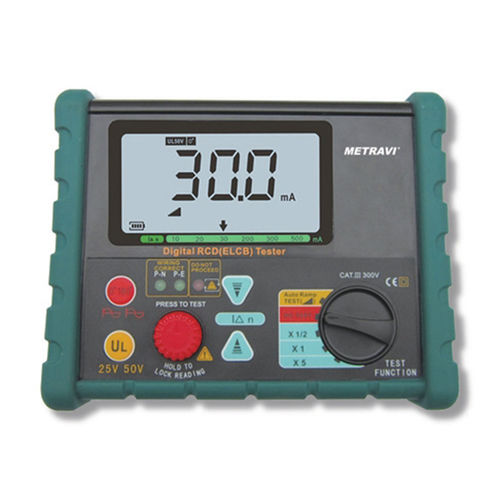
Tell us about your requirement

Price:
Quantity
Select Unit
- 50
- 100
- 200
- 250
- 500
- 1000+
Additional detail
Mobile number
Email

More Products in ELCB Tester Category
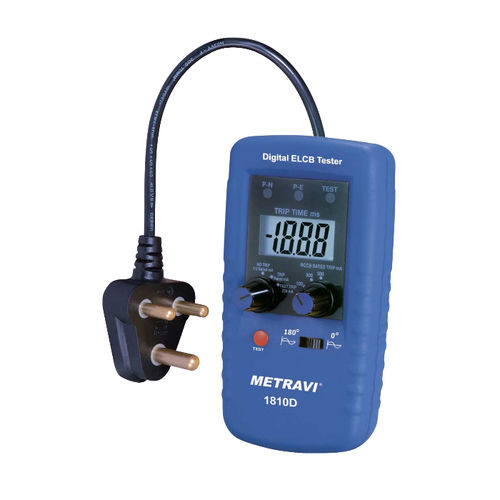
Metravi 1810D ELCB Tester
Price 7021.00 INR / Piece
Minimum Order Quantity : 1 Piece
Control Mode : Manual
Application : Testing Earth Leakage Circuit Breakers (ELCBs)
Display Type : LED indicators
Humidity : Up to 85% RH
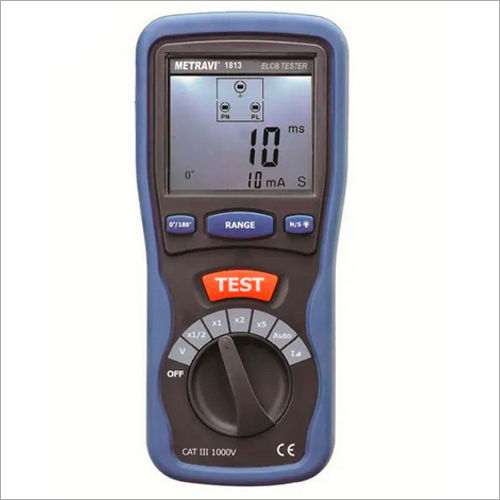
Metravi ELCB Tester 1813 ELCB RCD Tester
Price 12213 INR / Piece
Minimum Order Quantity : 1 Piece
Control Mode : Manual
Application : Industrial
Display Type : LED Indicators
Humidity : 85% RH (NonCondensing)
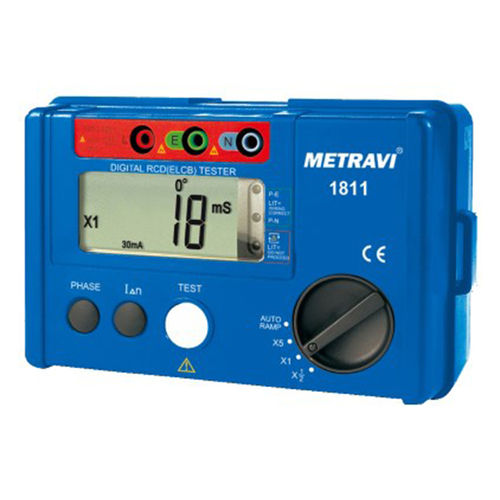
Metravi 1811 ELCB Tester
Price 11623.00 INR / Piece
Minimum Order Quantity : 1 Piece
Control Mode : Manual
Application : Testing of ELCB, RCCB, RCBO in electrical installations
Display Type : Dual LED Indicators
Humidity : Relative Humidity < 85% (NonCondensing)
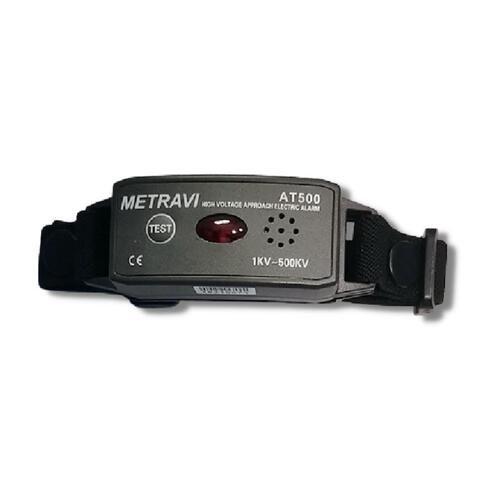
Non contact High Voltage Detector (Arm Type)
Price 4799 INR / Piece
Minimum Order Quantity : 1 Piece
Control Mode : Manual
Application : High voltage detection and safety
Display Type : LED and audible alarm
Humidity : 80% RH

Address
METRAVI INSTRUMENTS PVT. LTD.
GST : 19AAGCM1428H1ZH
GST : 19AAGCM1428H1ZH
- 32A, Ganesh Chandra Avenue, 4th Floor,Kolkata - 700013, West Bengal, India
- Phone :08071931506
- Send Inquiry
 Send Inquiry
 Send Inquiry
 Send SMS
 |
METRAVI INSTRUMENTS PVT. LTD.
All Rights Reserved.(Terms of Use) Developed and Managed by Infocom Network Private Limited. |
