 Call Us : 08071931506Call Us : 08071931506

 Send Inquiry
Metravi 7272 10A Micro Ohms Meter
Price 52097.00 INR/ Piece
MOQ : 1 Piece
Metravi 7272 10A Micro Ohms Meter Specification
- Frequency
- 50Hz
- Display Type
- LCD alphanumeric display
- Temperature
- 0C to 40C
- Number of Specimens
- Single specimen per test
- Interface Type
- RS232
- Mounting Type
- Portable, benchtop
- Humidity
- 80%RH (non-condensing)
- Response Time
- Instantaneous/real-time
- Accuracy
- 0.25% of reading 2 digits
- Resolution
- 0.1
- Power Supply
- 230V AC, 50Hz
- Test Range
- 1 to 2000
- Features
- Four terminal measurement, microprocessor based, in-built thermal printer, memory storage, rechargeable battery, robust case
- Equipment Type
- Micro Ohms Meter
- Automation Grade
- Automatic
- Application
- Low resistance measurement in electrical installations, contacts, busbars, cables, switches
- Measuring Range
- 0.1 to 2000
- Operating Voltage
- 230V AC
- Usage
- Electrical test & measuring
- Capacity
- 10A maximum test current
- Machine Weight
- approx 3.5 kg
- Control Mode
- Microprocessor controlled
- Size (L x W x H)
- 250 x 150 x 70 mm
- Max Output Current
- 10A DC
- Test Lead Type
- Heavy-duty, Kelvin Clip leads
- Overload Protection
- Yes
- Zero Adjustment
- Automatic and manual
- Calibration
- Factory calibrated
- Low Battery Indication
- Yes
- Data Storage
- Store up to 100 set readings
- Safety Compliance
- CAT II
- Input Fuse Rating
- 15A, 250V
Metravi 7272 10A Micro Ohms Meter Trade Information
- Minimum Order Quantity
- 1 Piece
- Payment Terms
- Cash in Advance (CID), Cheque, Cash Advance (CA)
About Metravi 7272 10A Micro Ohms Meter
Metravi 7272 10A Micro Ohms Meter Specifications:
- To measure resistance of various coils, and detect the resistance of various shunts
- To measure the contact resistance of electric components as the switch, plug in and relay
- To measure the resistance of metallic material, wires and cables as well as the resistance of metallic riveting of boat, vehicle and airplane.
- 10A Test Current for contact Resistance Measurement.
- The instrument has large LCD, allowing for high-resolution reading and faster testing speed.
- Automatic judgment of product condition while conducting tests.
- Maximum Resolution.
- Power supply from re-chargeable battery or 220V AC for continuous operation.
- Low-power indication.
- Various testing wires are available, measurement by four-wire method.
- 60,000 Counts Extra Large Backlight LCD.
- Measures from 1uOhms to 6 k.Ohms
- USB two way communication (no need installing drive).
- Wire length measurement.
- Data Hold.
- Data storage up to 1000 Data.
- PASS / FAIL function randomly checking measured value.
Precision Testing for Electrical Professionals
Engineered for precision, the Metravi 7272 Micro Ohms Meter provides exceptional accuracy in detecting low resistance, making it suitable for critical electrical testing tasks in power distribution, switchgear, and cable assemblies. Its high current capability, robust construction, and versatile controls deliver reliable results for demanding environments.
Built-in Features for Enhanced Functionality
Packed with features like four-terminal measurement, an in-built thermal printer, microprocessor control, and memory storage, this device is tailored for both efficient workflow and enhanced safety. Its automatic/manual zero adjustment and real-time LCD display contribute to error-free and streamlined operations.
Reliable Data Management and Reporting
With the ability to store up to 100 readings and integrated RS232 interface, the Metravi 7272 enables straightforward data logging and reporting. Easily transfer results or print them instantly with the built-in printer, simplifying record-keeping and compliance for electrical quality assurance.
FAQs of Metravi 7272 10A Micro Ohms Meter:
Q: How does the Metravi 7272 Micro Ohms Meter ensure measurement accuracy?
A: The Metravi 7272 employs four-terminal Kelvin measurement and microprocessor control, providing high accuracy of 0.25% of reading 2 digits. Factory calibration and heavy-duty leads further reduce errors associated with low resistance measurements.Q: What types of electrical applications can this meter be used for?
A: This meter is designed for low resistance measurement in electrical installations, including testing busbars, cables, switches, contact surfaces, and other components where precise resistance values are critical.Q: When should I use the automatic or manual zero adjustment feature?
A: Automatic zero adjustment is ideal for fast, routine measurements to eliminate lead resistance. Manual zero adjustment offers added control in conditions where extra precision or compensation for environmental factors is necessary.Q: Where can I access the stored measurement data?
A: Up to 100 sets of readings can be stored in the devices memory. Data can be retrieved on-screen, printed with the in-built thermal printer, or transferred to external systems via the RS232 interface.Q: What is the process for measuring resistance with this device?
A: Connect the supplied Kelvin clips to the specimen, select the desired current and range, perform zero adjustment if needed, and initiate measurement. Results are displayed instantly on the LCD and can be recorded or printed directly.Q: How does overload protection benefit the user?
A: The built-in overload protection and 15A fuse guard the meter and user against damage or hazards during high-current tests, ensuring both instrument longevity and operator safety.Q: What are the main benefits of using a microprocessor-controlled Ohms Meter like the Metravi 7272?
A: Microprocessor control enhances measurement precision, automates test functions, supports data storage and reporting, and allows for more reliable operation in diverse testing scenarios.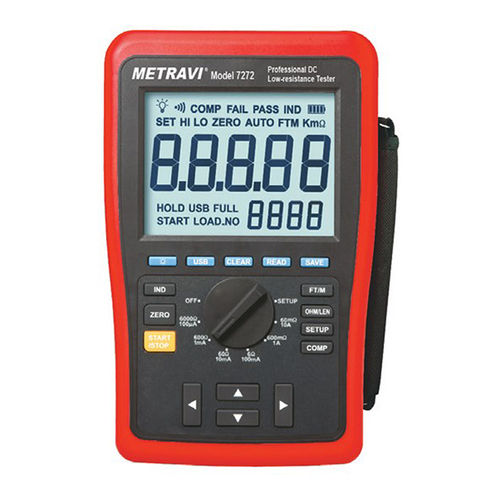
Tell us about your requirement

Price:
Quantity
Select Unit
- 50
- 100
- 200
- 250
- 500
- 1000+
Additional detail
Mobile number
Email

More Products in Process Meter Category
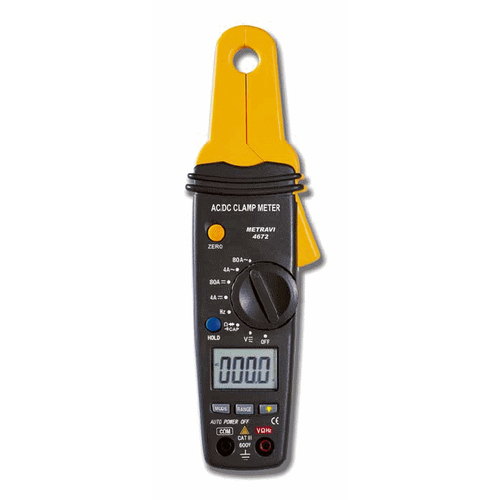
Metravi DT-4672 AC/DC Leakage Current Tester
Price 7257.00 INR / Piece
Minimum Order Quantity : 1 Piece
Temperature : 0C to 40C (Operating)
Display Type : Digital LCD display
Usage : Electrical testing and troubleshooting
Response Time : < 2 seconds
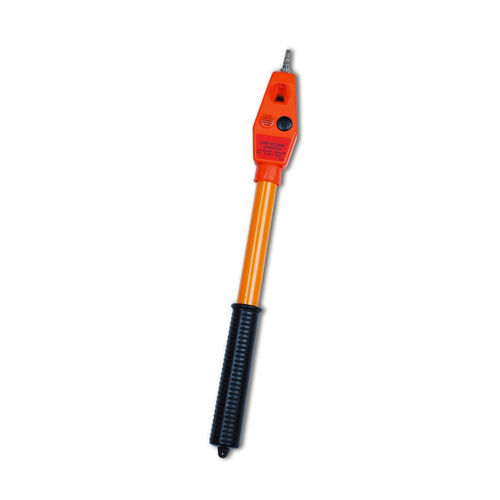
Metravi 276HD Contact-Type High Voltage Detector
Price 16697.00 INR / Piece
Minimum Order Quantity : 1 Piece
Temperature : Operating: 10C to +50C
Display Type : LED indicators and Buzzer
Usage : High Voltage Presence Testing
Response Time : < 1 second
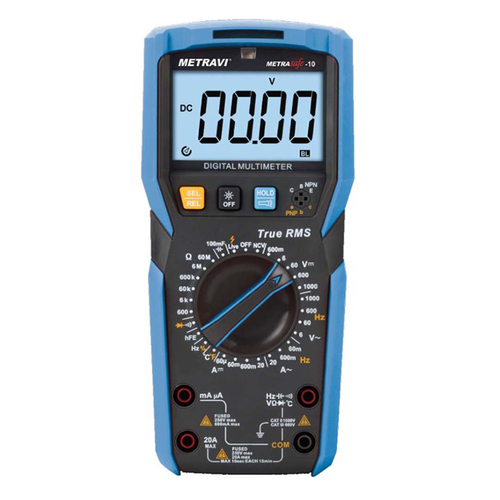
Metravi Metrasafe-10 TRMS Digital Multimeter with Auto backlight
Price 2655.00 INR / Piece
Minimum Order Quantity : 1 Piece
Temperature : 0C to 40C
Display Type : LCD with Autobacklight
Usage : Electrical and electronic measurement, diagnostic and testing
Response Time : Instant
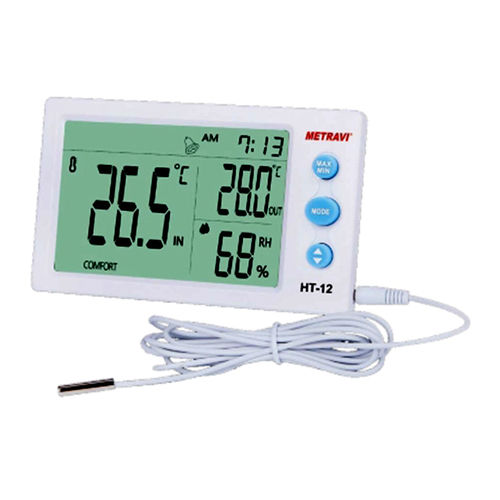
Metravi HT-12 Temperature and Humidity Meter
Price 1298.00 INR / Piece
Minimum Order Quantity : 1 Piece
Temperature : 10C~+50C
Display Type : Large LCD display
Usage : Temperature and humidity measurement
Response Time : <10 seconds

Address
METRAVI INSTRUMENTS PVT. LTD.
GST : 19AAGCM1428H1ZH
GST : 19AAGCM1428H1ZH
- 32A, Ganesh Chandra Avenue, 4th Floor,Kolkata - 700013, West Bengal, India
- Phone :08071931506
- Send Inquiry
 Send Inquiry
 Send Inquiry
 Send SMS
 Call Me Free
 |
METRAVI INSTRUMENTS PVT. LTD.
All Rights Reserved.(Terms of Use) Developed and Managed by Infocom Network Private Limited. |
