 Call Us : 08071931506Call Us : 08071931506

 Send Inquiry
Metravi MSO-5202D Mixed Signal Oscilloscope
Price 94577.00 INR/ Piece
MOQ : 1 Piece
Metravi MSO-5202D Mixed Signal Oscilloscope Specification
- Interface Type
- USB Host, USB Device, LAN, VGA, RS-232
- Resolution
- 8 bits
- Equipment Type
- Mixed Signal Oscilloscope
- Port Size
- USB Host, USB Device, LAN, VGA, Pass/Fail, RS-232
- Frequency
- Up to 70,000 wfms/s
- Humidity
- 85% RH
- Automation Grade
- Manual
- Application
- Measurement, analysis and troubleshooting in electronics, R&D, educational labs
- Display Type
- 7 inch TFT LCD, 800 x 480 pixels
- Power Supply
- 100-240V AC, 50/60Hz
- Temperature
- 10C - 40C Operating
- Test Range
- Bandwidth: 200 MHz
- Response Time
- Real-time sample rate up to 2 GSa/s
- Accuracy
- Sample rate mode: (3% reading + 0.05 div)
- Mounting Type
- Bench Top
- Operating Voltage
- 100-240V AC
- Features
- 16 digital channels, advanced triggering, auto measurement, pass/fail function, waveform recorder, FFT, LAN connectivity
- Measuring Range
- Vertical: 2 mV/div ~ 10 V/div
- Usage
- Oscilloscope signal analysis
- Machine Weight
- Approx. 3.8 kg
- Control Mode
- Manual/Push Button
- Language Support
- Multi-language
- Memory Depth
- Up to 40Mpts
- Time Base Range
- 2 ns/div ~ 100 s/div
- Trigger Modes
- Edge, Pulse Width, Slope, Video, Alternative, Pattern, Duration, Serial Bus
- Maximum Sample Rate
- 2 GSa/s real-time per channel
- Data Storage
- Waveform, settings, and screen image to USB
- Record Length
- Up to 40 million points
- Input Impedance
- 1 M 2%, ~20 pF
- Math Channels
- 4 math functions
- Digital Inputs
- 16 digital channels (MSO)
- Waveform Capture Rate
- Up to 70,000 wfms/s
- Math Functions
- Add, Subtract, Multiply, FFT
- Number of Channels (Analog/Digital)
- 2 Analog + 16 Digital
- Input Coupling
- DC, AC, GND
- Display
- 7-inch color LCD with 64k color, 800480 resolution
- Vertical Bandwidth
- 200 MHz
- Probe Attenuation
- 1X, 10X, 100X, 1000X
Metravi MSO-5202D Mixed Signal Oscilloscope Trade Information
- Minimum Order Quantity
- 1 Piece
- Payment Terms
- Cash Advance (CA), Cash in Advance (CID), Cheque
- Supply Ability
- Piece
About Metravi MSO-5202D Mixed Signal Oscilloscope
- 200 / 100 / 60MHz bandwidth
- 1GSa/s Real Time sample rate
- Large (7.0 inch) colour display, WVGA (800480)
- 16 channels Logic Analyzer, 500MSa/s sample rate
- Record length up to 1M
-
Trigger mode : edge/pulse width/line selectable video/slop/overtime etc.
-
USB host and device connectivity, standard
-
Multiple automatic measurements
-
Four math functions, including FFTs standard
-
VGA Optional
Versatile Signal Analysis
Equipped with both analog and digital inputs, the MSO-5202D is ideal for capturing complex mixed signals. Its advanced features, such as math functions (Add, Subtract, Multiply, FFT) and multiple trigger modes, allow users to analyze and interpret various electronic signals with high precision. A robust waveform capture rate and deep memory advance troubleshooting and analysis capabilities.
User-Friendly Design and Connectivity
The oscilloscope boasts a vivid 7-inch color LCD for clear viewing, supporting multi-language operation. Multiple storage and connectivity options (USB, LAN, VGA, RS-232) enable easy data transfer and integration within modern laboratory environments. Its ergonomic manual and push-button controls foster efficient workflow for both students and engineers.
FAQ's of Metravi MSO-5202D Mixed Signal Oscilloscope:
Q: How does the Metravi MSO-5202D contribute to accurate signal measurement in electronics testing?
A: The MSO-5202D features a high vertical bandwidth (200 MHz) and a real-time sample rate of up to 2 GSa/s per channel. Its memory depth of up to 40 million points enables detailed waveform capture, allowing users to analyze complex signals with accuracy and reliability during diagnostic and development tasks.Q: What process should I follow to save waveform data and screen images?
A: To store waveform data or screen images, connect a USB storage device to the USB Host port. Use the oscilloscope's menu system to select the desired save action-whether for waveform data, configuration settings, or screen captures-and follow the on-screen prompts to securely transfer data.Q: When is it advantageous to use advanced trigger modes on the MSO-5202D?
A: Advanced trigger modes (including edge, pulse width, slope, video, alternative, pattern, duration, and serial bus) are beneficial when isolating specific signal events or analyzing serial communication. These triggers help pinpoint anomalies or transitions, optimizing recording and troubleshooting in R&D or educational labs.Q: Where can the MSO-5202D be effectively utilized?
A: This mixed signal oscilloscope is best utilized in electronics laboratories, R&D centers, and educational institutions. Its ability to handle both analog and digital signals makes it ideal for measurement, analysis, and fault detection in circuit development and educational projects.Q: What is the usage benefit of having 16 digital channels alongside 2 analog channels?
A: The addition of 16 digital channels greatly enhances the MSO-5202D's capacity to monitor and analyze multiple digital signals simultaneously, making it suitable for mixed-signal circuit debugging. Users can correlate analog phenomena with digital logic, streamlining diagnosis and facilitating advanced system analysis.Q: How do the math functions on the MSO-5202D improve waveform analysis?
A: Math functions such as addition, subtraction, multiplication, and FFT allow users to perform complex calculations directly on captured waveforms. These tools are essential for identifying frequency components, comparing signals, and performing detailed waveform analysis without external computation tools.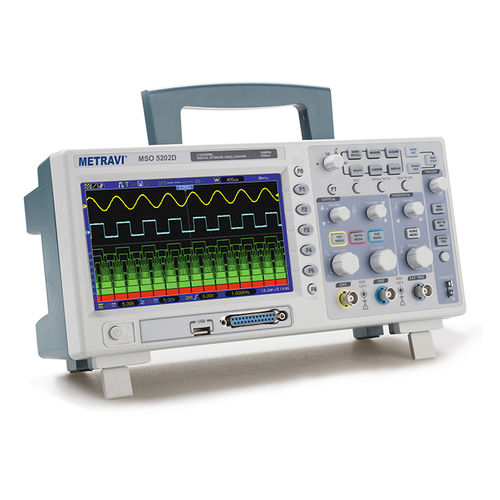
Tell us about your requirement

Price:
Quantity
Select Unit
- 50
- 100
- 200
- 250
- 500
- 1000+
Additional detail
Mobile number
Email

More Products in Oscilloscopes Category
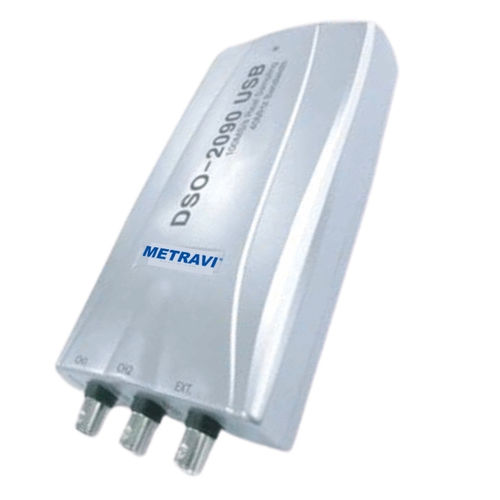
Metravi DSO-2090 PC-based Dual Channel Digital Storage Oscilloscope
Price 29677.00 INR / Piece
Minimum Order Quantity : 1 Piece
Application : Signal analysis, diagnostics, education, R&D
Usage : Laboratory, education, field service
Automation Grade : Manual/Software Automated
Humidity : 90% RH
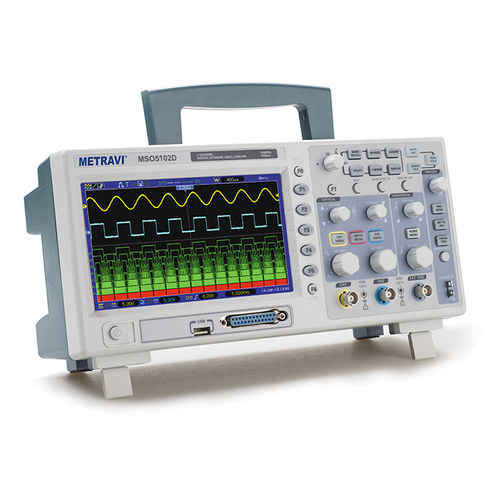
Metravi MSO-5102D Mixed Signal Oscilloscope
Price 82187.00 INR / Piece
Minimum Order Quantity : 1 Piece
Application : Electronic Circuit Testing, Signal Analysis, Research, Education
Usage : Oscilloscope for Mixed Signal Analysis
Automation Grade : SemiAutomatic / Digital
Humidity : 85% RH (noncondensing)
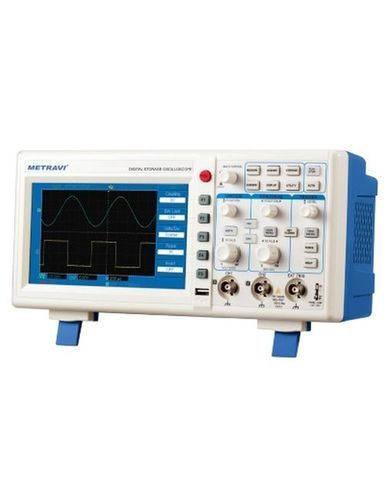
Metravi DSO-5150E Dual Channel Digital Storage Oscilloscope
Price 79237.00 INR / Piece
Minimum Order Quantity : 1 Piece
Application : Electrical Signal Analysis, Education, Service, Laboratory
Usage : Oscilloscope measurements for electronics and service applications
Automation Grade : Manual
Humidity : 85% RH (noncondensing)
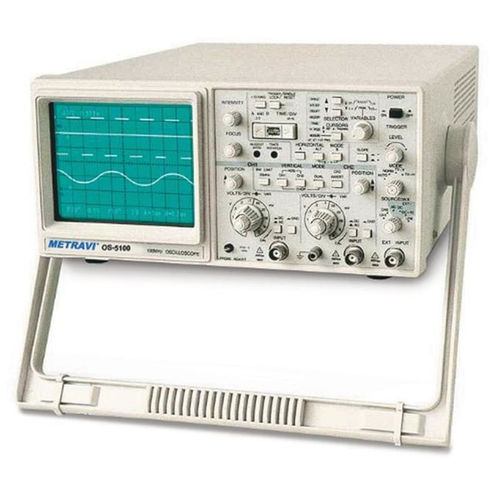
Metravi OS-5100 Cathode Ray Oscilloscope
Price 82777.00 INR / Piece
Minimum Order Quantity : 1 Piece
Application : Measurement & Display of Electrical Signals
Usage : Laboratory / Education / Electronic Testing
Automation Grade : Manual
Humidity : Up to 80% (noncondensing)

Address
METRAVI INSTRUMENTS PVT. LTD.
GST : 19AAGCM1428H1ZH
GST : 19AAGCM1428H1ZH
- 32A, Ganesh Chandra Avenue, 4th Floor,Kolkata - 700013, West Bengal, India
- Phone :08071931506
- Send Inquiry
 Send Inquiry
 Send Inquiry
 Send SMS
 |
METRAVI INSTRUMENTS PVT. LTD.
All Rights Reserved.(Terms of Use) Developed and Managed by Infocom Network Private Limited. |
