 Call Us : 08071931506Call Us : 08071931506

 Send Inquiry
Metravi OS-5030 Dual Channel Oscilloscope
Price 33807.00 INR/ Piece
MOQ : 1 Piece
Metravi OS-5030 Dual Channel Oscilloscope Specification
- Humidity
- Up to 85% RH (non-condensing)
- Display Type
- CRT Analog Display
- Response Time
- Rise Time: 12 ns
- Accuracy
- 3% (at full scale)
- Power Supply
- AC 220V 10%, 50Hz
- Measuring Range
- Vertical: 5 mV/div to 20 V/div
- Interface Type
- BNC Input
- Automation Grade
- Manual
- Features
- Alternate and Chop Modes, X-Y Mode, Trigger Level Adjustment, Brightness and Focus Controls
- Equipment Type
- Dual Channel Analog Oscilloscope
- Frequency
- Bandwidth: 30 MHz
- Operating Voltage
- AC 220V 10%
- Application
- Signal Analysis, Electrical/Electronics Testing
- Mounting Type
- Bench Top
- Temperature
- 0C to 40C
- Usage
- Laboratory, Service, Education
- Capacity
- 30 MHz Bandwidth
- Machine Weight
- About 7 kg
- Control Mode
- Manual
- CRT Size
- 6 inch rectangular
- Dimensions
- 375 mm x 155 mm x 455 mm (L x H x D)
- Calibration Output
- 2V 2%, 1 kHz
- Trigger Modes
- Auto, Normal, TV Frame, TV Line
- Input Impedance
- 1 M 2%, 25 pF 5 pF
- Trigger Source
- CH1, CH2, Alternate, Line, Ext
- Maximum Input Voltage
- 400 V (DC + AC peak, at 1 kHz)
- Sweep Time Base
- 0.2 s/div to 0.5 s/div
- Channels
- 2 (Dual Channel)
- X-Y Operation
- Yes
- Safety Compliance
- Conforms to IS standards
- Vertical Deflection
- 5 mV/div ~ 20 V/div, 5% (X10: 50 mV/div ~ 200 V/div)
Metravi OS-5030 Dual Channel Oscilloscope Trade Information
- Minimum Order Quantity
- 1 Piece
- Payment Terms
- Cash Advance (CA), Cash in Advance (CID), Cheque
- Supply Ability
- Piece
About Metravi OS-5030 Dual Channel Oscilloscope
- Dual Trace Dual Channel Oscilloscope
- Bandwidth: 30MHz
- Full bandwidth sweeping circuit is used in the sweeping system
- The flexible and convenient triggering mode has the functions for selecting signals from one channel or triggered by Ext signals
- ALT trigger to observe signals from two irrelative channels
- The instrument has the functions of TV-H / TV-V synchronization and trigger-lock to observe all kinds of signals stably
- From the terminal for trigger input, CH1 and CH2 signals can be output along with the triggering channel to connect the Ext frequency counter
- Y deflection operation: Y1, Y2, ALT, CHOP, ADD, mode X-Y
- Vertical Deflection: 5mV/Div to 20V/Div in factor 1-2-5 sequence in 12 steps
- Rising time: < 18nS
- Maximum Input Voltage: 400V (DC +ACp-p)
- Triggering Source: Y1, Y2, ALT, POWER, EXT
- Trigger Coupling: AC/DC (EXT), NORM/TV-H, TV-V
- Horizontal Sweep Mode: AUTO, TRIG, LOCK, SINGLE
- Sweep time factor: 0.1uS/div to 0.2s/div in 1-2-5 sequence in 20 steps
- Magnification: x10
- X-Y Mode input: X-Axis YI and Y-Axis Y2
- Z Axis minimum input level: TTL Level
- Calibration Signal: Square wave of 0.5V at 1kHz
- CTR Display size: 8cm x 10cm
Versatile Dual Channel Performance
The OS-5030 features two independent input channels, enabling simultaneous observation and comparison of different electrical signals. Its channel versatility makes it an invaluable tool for diagnosing complex circuits, aiding both professionals and students in their measurements and experimentation.
Comprehensive Signal Analysis
With a sweep time base ranging from 0.2 s/div to 0.5 s/div and vertical deflection from 5 mV/div to 20 V/div, the OS-5030 allows for detailed and precise signal analysis. The CRT display supports clear visualization, while features like X-Y operation expand its analytical capability.
Reliable and Safe Operation
Certified under IS standards, the Metravi OS-5030 ensures user safety and high operational reliability. The oscilloscope maintains consistent performance in environments up to 85% humidity and temperatures between 0C and 40C, making it suitable for a wide range of working conditions.
FAQ's of Metravi OS-5030 Dual Channel Oscilloscope:
Q: How do I use the Metravi OS-5030 for basic signal testing?
A: To use the OS-5030 for signal testing, connect your signal source to one of the BNC input channels (CH1 or CH2), select your preferred vertical and time base settings, and adjust the trigger mode based on the nature of your signal. The CRT display will visualize the waveform, allowing for adjustment and detailed observation.Q: What types of signals can the OS-5030 oscilloscope measure?
A: The OS-5030 can measure a range of electrical signals with input voltages up to 400V (DC + AC peak, at 1 kHz), vertical sensitivities from 5 mV/div to 20 V/div, and bandwidths up to 30 MHz, making it suitable for most laboratory, educational, and service testing applications.Q: When should I use alternate or chop mode on the oscilloscope?
A: Use alternate mode for viewing two signals of similar frequency simultaneously, as it switches between channels every scan. Chop mode is ideal for comparing low-frequency signals, as it rapidly switches between channels within a single sweep, presenting both waveforms together for easier comparison.Q: Where can I safely operate the Metravi OS-5030?
A: You can operate the OS-5030 in laboratory, educational, or service environments with an AC 220V 10% power supply, temperatures ranging from 0C to 40C, and humidity up to 85% RH (non-condensing). Ensure the oscilloscope is placed on a stable bench-top and away from excessive moisture or heat sources.Q: What is the benefit of the oscilloscope's X-Y operation mode?
A: The X-Y operation allows the oscilloscope to plot one input signal against another, rather than time, which is useful for analyzing phase relationships and creating Lissajous patterns. This feature enhances its utility in advanced signal analysis and troubleshooting complex circuits.Q: How does the trigger system enhance signal analysis?
A: The trigger system, with modes including auto, normal, TV frame, and TV line, as well as multiple trigger sources, ensures stable and consistent waveform display. This allows the user to effectively lock onto repetitive signals or capture transient events for in-depth analysis.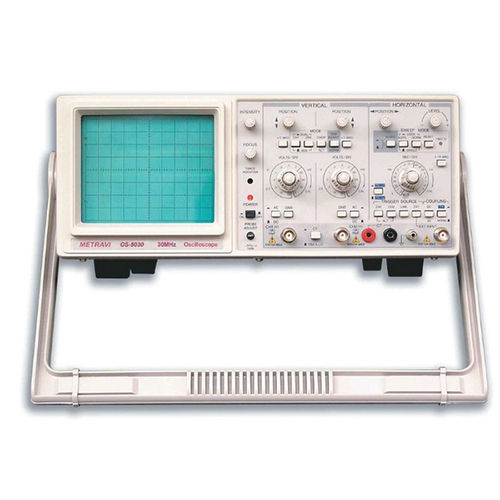
Tell us about your requirement

Price:
Quantity
Select Unit
- 50
- 100
- 200
- 250
- 500
- 1000+
Additional detail
Mobile number
Email

More Products in Oscilloscopes Category
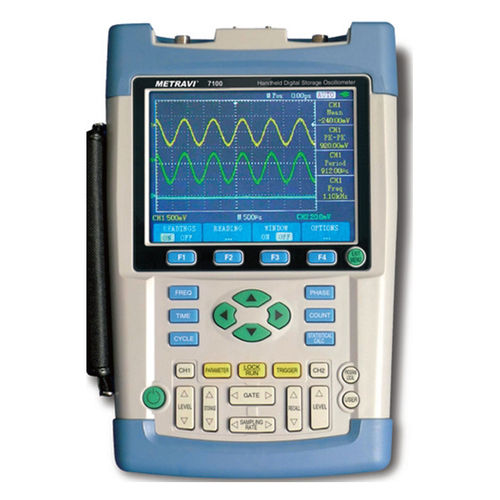
Metravi 7100 Oscillometer
Price 303437.00 INR / Piece
Minimum Order Quantity : 1 Piece
Operating Voltage : 220V AC
Frequency : 50 Hz
Equipment Type : Oscillometer
Display Type : Digital LED
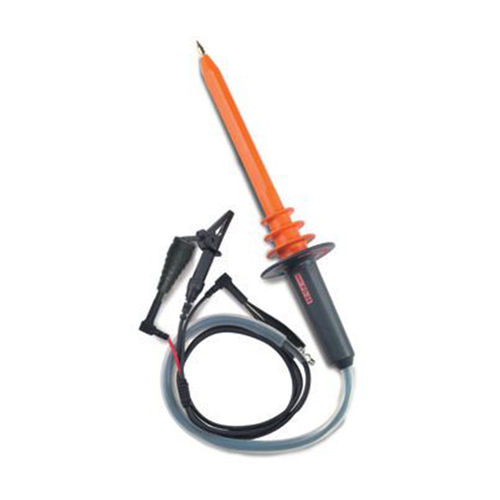
Metravi PD-20S Oscilloscope High Voltage Probe
Price 9617.00 INR / Piece
Minimum Order Quantity : 1 Piece
Operating Voltage : Up to 20kV (peak)
Frequency : DC to 50 MHz
Equipment Type : Oscilloscope High Voltage Probe
Display Type : No display (signal output to oscilloscope)
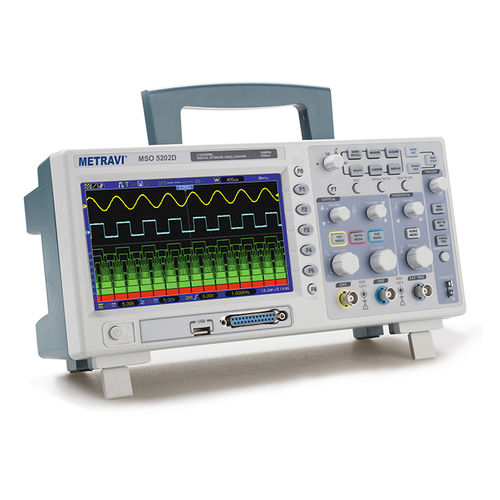
Metravi MSO-5202D Mixed Signal Oscilloscope
Price 94577.00 INR / Piece
Minimum Order Quantity : 1 Piece
Operating Voltage : 100240V AC
Frequency : Up to 70,000 wfms/s
Equipment Type : Mixed Signal Oscilloscope
Display Type : 7 inch TFT LCD, 800 x 480 pixels
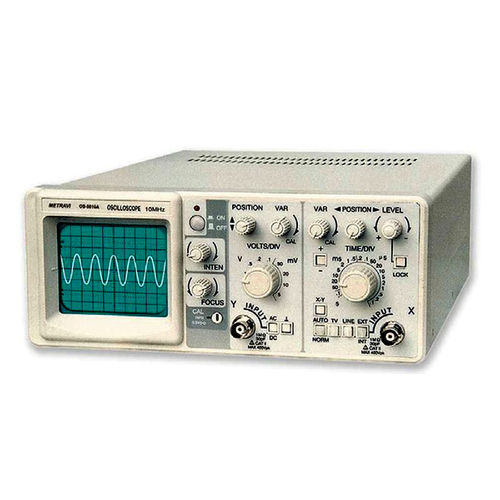
Metravi OS-5010A Analogue Oscilloscope
Price 17827.00 INR / Piece
Minimum Order Quantity : 1 Piece
Operating Voltage : 220V AC
Frequency : Up to 50 MHz
Equipment Type : Analogue Oscilloscope
Display Type : CRT Display

Address
METRAVI INSTRUMENTS PVT. LTD.
GST : 19AAGCM1428H1ZH
GST : 19AAGCM1428H1ZH
- 32A, Ganesh Chandra Avenue, 4th Floor,Kolkata - 700013, West Bengal, India
- Phone :08071931506
- Send Inquiry
 Send Inquiry
 Send Inquiry
 Send SMS
 |
METRAVI INSTRUMENTS PVT. LTD.
All Rights Reserved.(Terms of Use) Developed and Managed by Infocom Network Private Limited. |
