 Call Us : 08071931506Call Us : 08071931506

 Send Inquiry
Metravi 120-OTS Manual Oil Test Set
Price 83957.00 INR/ Piece
MOQ : 1 Piece
Metravi 120-OTS Manual Oil Test Set Specification
- Response Time
- Instantaneous
- Application
- Dielectric breakdown voltage testing of insulating oil
- Measuring Range
- 0-80 kilovolts (kV)
- Features
- Manual crank operation, robust enclosure, safety interlocks
- Display Type
- Analog scale
- Port Size
- Standard clamp terminals
- Power Supply
- 220V AC, 50 Hz
- Max Height
- Approx. 350 mm
- Resolution
- 0.1 kV
- Equipment Type
- Manual Oil Test Set
- Specimen Size
- Standard test cup (500 ml)
- Number of Specimens
- 1 at a time
- Mounting Type
- Portable/Benchtop
- Temperature
- 0C to 45C
- Frequency
- 50 Hz
- Humidity
- Up to 85% RH (non-condensing)
- Operating Voltage
- 220V AC 10%, 50 Hz
- Automation Grade
- Manual
- Test Range
- 0-80 kV
- Accuracy
- 3% FSD
- Usage
- Electric insulation oil BDV testing
- Capacity
- Up to 500 ml oil
- Machine Weight
- Approx. 23 kg
- Test Speed
- Manual operation
- Test Width
- Standard 340 mm gap
- Control Mode
- Manual
- Calibration
- Factory calibrated & traceable to national standards
- Safety Features
- Automatic grounding on cabinet opening, interlocked cover
- Protection
- High-voltage circuit breaker and fuses
- Dielectric Strength Measurement
- Up to 80 kV
- Dimensions (W x D x H)
- Approx. 380 mm x 280 mm x 350 mm
- Material of Construction
- Heavy duty metal enclosure with powder coating
- Accessories
- Measuring electrodes, oil cup, leads, instruction manual
- Storage Conditions
- Should be stored in dry and clean environment
- Electrode Gap Adjustment
- Adjustable 2.5 mm and 4.0 mm as per standards
- Panel Meter Type
- Moving Coil analog voltmeter
- Cranking Mechanism
- Insulated hand wheel
- Oil Cup Material
- Glass with brass electrodes
Metravi 120-OTS Manual Oil Test Set Trade Information
- Minimum Order Quantity
- 1 Piece
- Payment Terms
- Cash in Advance (CID), Cheque, Cash Advance (CA)
- Supply Ability
- 10 Pieces Per Month
About Metravi 120-OTS Manual Oil Test Set
- It is ideal for speedy and accurate testing of di-electric strength of transformer and circuit beaker oil under test room condition in accordance with IS:6792-1972 for oil testing.
- Input: 230V Single Phase AC 50Hz.
- Output: Continuously variable from 0 to 120kV AC with centre point of the HV winding earthed
- Capacity: Spread over a range from 500VA to 1200VA depending on the output voltage
- Duty: Intermittent duty cycle
- Nature of Cooling: The transformer is cast resin type air cooled
- Manually Operated
Reliable Oil Dielectric Strength Measurement
The Metravi 120-OTS provides accurate dielectric breakdown voltage testing for various insulating oils. It ensures reliability with a measuring range from 0 to 80 kV, and an accuracy of 3% FSD using a moving coil analog voltmeter. The instrument's robust construction, calibrated performance, and adherence to national standards make it a dependable tool for electrical testing laboratories, utilities, and maintenance teams.
Enhanced User Safety and Durable Construction
Safety is paramount in the Metravi 120-OTS design. Its heavy-duty, powder-coated enclosure, automatic grounding, and secure interlocks minimize electrical hazards during operation. The durable glass oil cup with brass electrodes ensures reliable and consistent testing conditions, while easy-to-adjust electrode gaps align with industry standards, promoting safe and efficient usage.
Versatile and Portable for Field and Laboratory Use
With a compact form factor and a machine weight of approximately 23 kg, this manual oil test set is conveniently portable and can be mounted on benchtops. Its manual crank mechanism, simple analog interface, and standard clamp terminals facilitate straightforward operation, making it suitable for both on-site and laboratory-based oil dielectric tests.
FAQ's of Metravi 120-OTS Manual Oil Test Set:
Q: How is the oil dielectric strength measured using the Metravi 120-OTS?
A: The Metravi 120-OTS measures oil dielectric strength by manually increasing the voltage between two brass electrodes immersed in the oil sample. The voltage is raised until the insulating oil breaks down, and the breakdown value is displayed on the moving coil analog voltmeter.Q: What safety features are integrated into the Metravi 120-OTS Manual Oil Test Set?
A: The device offers multiple safety features, including automatic grounding when the cabinet is opened, an interlocked cover, high-voltage circuit breakers, and additional fuses, protecting users during and after the testing process.Q: When should I use the Metravi 120-OTS for oil dielectric testing?
A: This device should be used whenever you need to determine the dielectric breakdown voltage of insulating oils in transformers or electrical equipment, typically during routine maintenance, oil quality assessment, or compliance testing.Q: Where can the Metravi 120-OTS be used effectively?
A: The instrument is designed for portability and durability, making it suitable for use in laboratories, electrical maintenance workshops, substations, and field testing locations where oil dielectric strength analysis is required.Q: What is the process for calibrating the Metravi 120-OTS?
A: The test set comes factory-calibrated and traceable to national standards. If recalibration is needed, it should be performed by authorized service providers to ensure accurate and reliable measurements.Q: How do I adjust the electrode gap for testing different oil standards?
A: The Metravi 120-OTS features adjustable electrodes that can be set to 2.5 mm or 4.0 mm gaps, following oil test standards. Adjust the gap by loosening the filament, setting the desired width, and securely fastening the electrodes before starting the measurement.Q: What benefits does manual crank operation provide in the Metravi 120-OTS?
A: Manual crank operation allows precise control over voltage increase, minimizing chances of oil overheating or rapid voltage spikes, and provides immediate response through the analog voltmeter for accurate determination of breakdown voltage.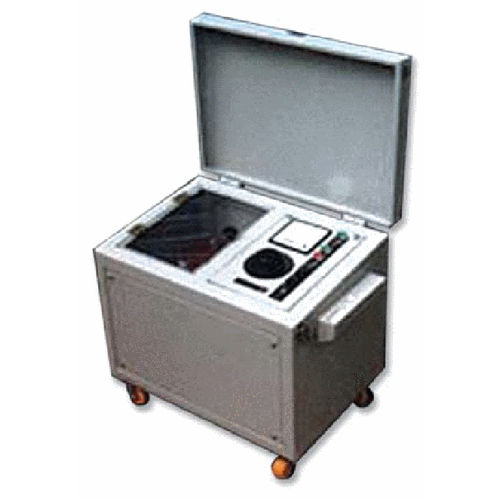
Tell us about your requirement

Price:
Quantity
Select Unit
- 50
- 100
- 200
- 250
- 500
- 1000+
Additional detail
Mobile number
Email

More Products in Process Meter Category
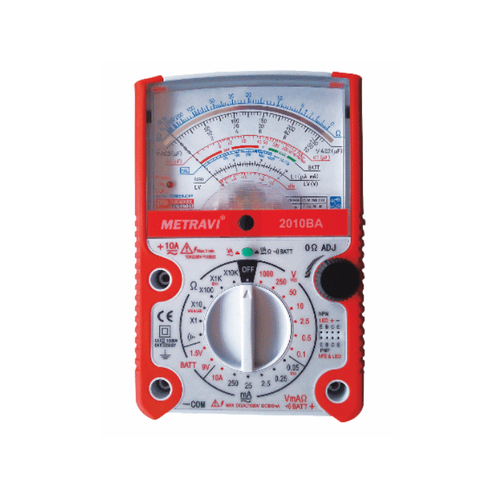
Metravi 2010BA Classic Analogue Testing Meter
Price 2537.00 INR / Piece
Minimum Order Quantity : 1 Piece
Usage : Low Voltage and General Service Electrical Testing
Control Mode : Analogue
Accuracy : 2% of Full Scale (Varies By Range)
Temperature : 0C to 40C
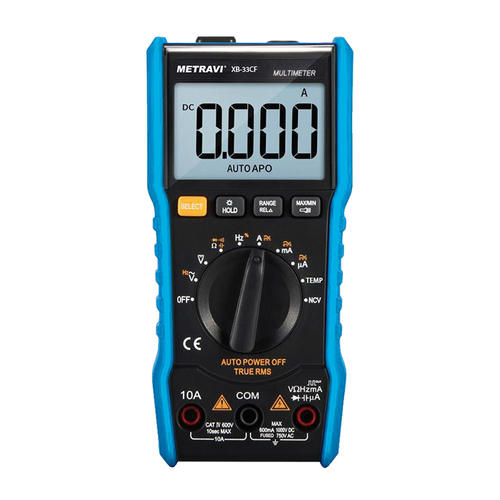
Metravi XB-33CF Digital TRMS Multimeter with Flash Light
Price 1947.00 INR / Piece
Minimum Order Quantity : 1 Piece
Usage : Multifunctional Electrical Measurements
Control Mode : Manual
Accuracy : Up to 0.5% +3 digits (VDC)
Temperature : 0C ~ 40C
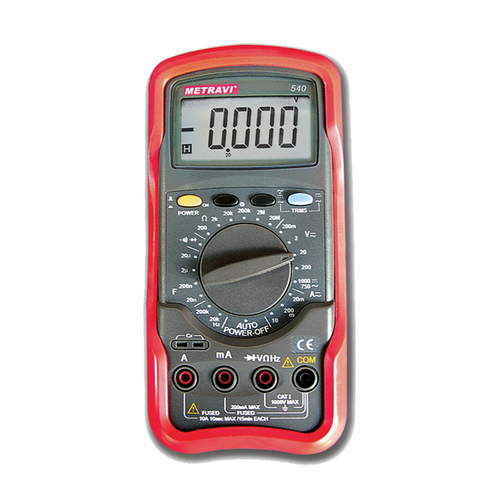
Metravi 540 handheld Digital TRMS Multimeter
Price 2995.00 INR / Piece
Minimum Order Quantity : 1 Piece
Usage : General purpose and industrial electrical measurements
Control Mode : Manual
Accuracy : Basic VDC Accuracy: (0.5%+2)
Temperature : Operating: 0C to 40C; Storage: 10C to 50C
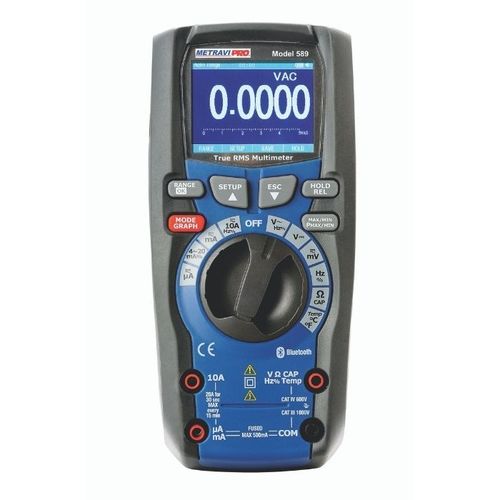
Metravi PRO 589 TRMS Digital Multimeter with Wireless Connectivity
Price 22597.00 INR / Piece
Minimum Order Quantity : 1 Piece
Usage : Professional electrical measurements
Control Mode : Manual & Auto Range
Accuracy : (0.5%+3) for VDC
Temperature : 0C to 40C operating

Address
METRAVI INSTRUMENTS PVT. LTD.
GST : 19AAGCM1428H1ZH
GST : 19AAGCM1428H1ZH
- 32A, Ganesh Chandra Avenue, 4th Floor,Kolkata - 700013, West Bengal, India
- Phone :08071931506
- Send Inquiry
 Send Inquiry
 Send Inquiry
 Send SMS
 |
METRAVI INSTRUMENTS PVT. LTD.
All Rights Reserved.(Terms of Use) Developed and Managed by Infocom Network Private Limited. |
